How LALAL.AI Helped Recover Music After a Studio Fire — Interview with Reid Sorel
One of the most vital use cases of AI stem separation is restoration. We talked to this Nashville-based producer to show that AI isn't replacing creators; it can help them restore their art.

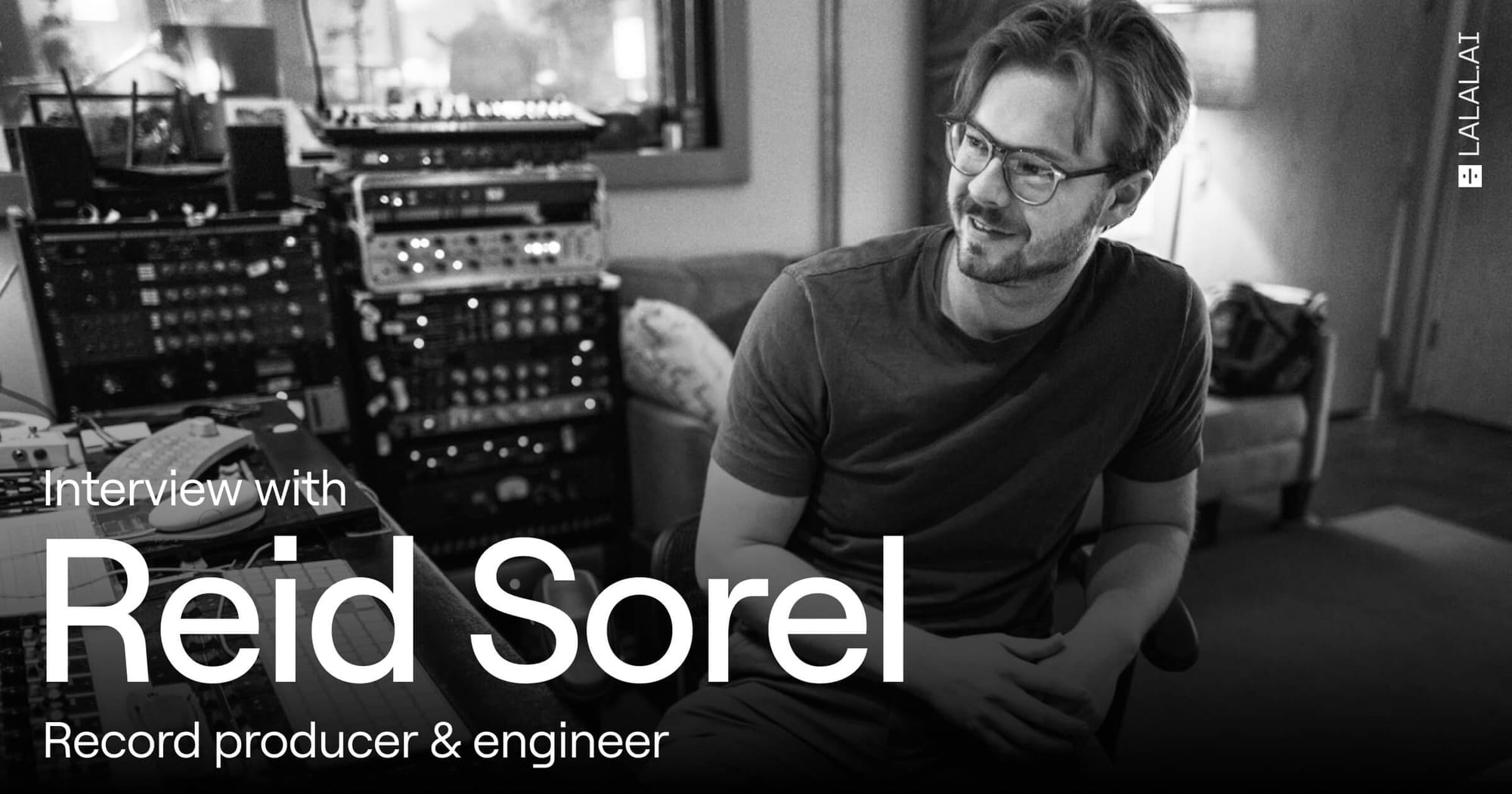
For our ongoing series featuring talented LALAL.AI users, we spoke with Reid Sorel—a Nashville-based songwriter, producer, and audio engineer—about Nashville music scene, Reid's projects, and the practical ways he uses stem separation in his work.
From recovering demos after a studio fire to cleaning up heavily bleeding vocals in live video sessions, Reid shared how LALAL.AI fits into professional production workflows of an audio engineer and producer where time, audio quality, and deliverables matter.
Building a Career in Nashville’s Music Scene
Reid is a professional songwriter and producer based in Nashville, Tennessee, who's been working for about five years. We couldn't help but ask him about his journey and how he's got into the industry.
I attended Belmont University here in Nashville, where I studied audio engineering and minored in music business. Right out of the gate, I started working on music immediately after graduating. Initially, I focused on sync music and securing placements, which really helped me kickstart my career.
At the same time, I worked with both independent artists and more established producers in Nashville, often in an assistant role. On major-label projects, I handled everything from vocal editing to mix prepping, full band editing, and sometimes additional engineering or production work.
Today, I'm doing a mix of the same things, except the proportions of it all have changed. I would say 85% of my income is from independent music production, mixing, engineering, and part of the remainder is the various or occasional sync projects or sync placement I land, as well as some assistant work for other producers, mix engineers—people that have won Grammys and who are very established here in the Nashville community.
I’ve collaborated with the Lehning brothers, Jason and Jordan. Jason is a Grammy-winning mix and tracking engineer, and Jordan has worked on a million cool projects, from small productions to string arrangements for Kacey Musgraves and numerous other projects in town.
Beyond that, I've also worked a lot with Luke Dick, a songwriter and producer; Jamie Kenney, who has been a big mentor of mine, brought me in for a Colbie Caillat album a couple of years ago. He's a songwriter and producer too, currently with Sony. And more recently, we’ve been working on things for Max McNown, who is an up-and-coming folk and country Americana artist.
Most of my projects are with small independent artists here in Nashville, including those landing their first record or publishing deals. I end up doing a lot of country just because that's what a lot of the industry is here, but there's also an awesome indie scene and a lot of great rock, R&B, and pop that's coming out of Nashville now. One of the main artists I've been working with in that space is Cole Ritter. We're currently co-producing a large project with him and my mentor Joe Pisapia, a well-known Nashville producer who has worked with Ben Folds, k.d. lang, and used to be in the band Guster.
Recovering Demos After a Studio Fire with LALAL.AI
When Reid reached out to us, saying that he used LALAL.AI to restore demos of his friend, which were lost in a studio fire, we were genuinely interested to learn more about it.
"I used LALAL.AI on a number of tracks and that turned out to work really well for him. In fact, it worked like magic."
There's an artist that I've worked with, and her dad is an audio engineer who has always loved to get the stems for projects, dig through them to play around with. He had been using LALAL.AI to separate the stems to hear exactly what his daughter was singing on the tracks.
That was the first time I heard of LALAL.AI. He had tried a number of similar tools and said that was his favourite one. But more recently, my mentor’s studio tragically burned down in a fire. He had a collection of demos as MP3 files on Dropbox, but no backups of the Pro Tools sessions. He wasn't able to go back, but he wanted to still pitch these songs to artists that he was working with, allowing them to record their own vocals instead of his own.
He asked me to dig around and see if there was anything that I could do to take his voice off of the demos so other artists could sing over them. I used LALAL.AI on a number of tracks and that turned out to work really well for him. In fact, it worked like magic! For a pure utility standpoint, it was really helpful. Eventually, he was able to get new vocals on that and it worked really great.
I’ve experimented with other tools like iZotope and Logic Pro, which also have stem separation features. At some point, I tried to remove the reverb from a vocal with the iZotope de-reverb plugin but it didn't really work all that well. However, I was able to isolate vocals and take off the reverb using LALAL.AI, which was a lot better, even though I still needed the artist's original dry stems.
"A lot of people couldn’t believe that vocals were recorded live as it sounds like it was an isolated studio vocal."
Watch the full video at Substack
Besides, I recently used LALAL.AI for a live video session. The singer’s mic was positioned with his back to the band, which resulted in quite a lot of bleeding from drums and other instruments. I first tried Waves’ Clarity VX plugin, which I reached for its convenience. It worked before but this time, the bleed was a little too much, it was starting to mess with the sound of the vocal. So this time, I exported it out of the DAW, uploaded it to LALAL.AI, and used the stem separation to isolate the vocal. And that helped a lot!
I was even able to compress the vocal as much as I wanted to, which is really the danger when you have a lot of bleeding and you want to get that controlled, polished vocal sound: when you start to compress a little bit, all that bleed just comes way up. So with this vocal now isolated, I was able to compress it the way I would a studio vocal.
Then I also could tune it, even though his artist didn't need any tuning, technically; it’s just a couple of notes here and there that we knew the artist could hit because they did in other parts. However, it was wildly positive from the client and just allowed him to feel more confident in putting his best foot forward.
There are a lot of purists out there who would say that in a live video, you shouldn't tune a vocal at all, and I tend to agree, but I'm not changing how the vocal actually sounds. It's more just fitting it back in and removing the distractions so that you're getting more of the original intent of the performance and more of an accurate depiction of what this artist can actually do and sound like.
A lot of people couldn’t believe that vocals were recorded live as it sounds like it was an isolated studio vocal.
Follow LALAL.AI on Instagram, Facebook, Twitter, TikTok, Reddit, LinkedIn, and YouTube to keep up with all our updates and special offers.